
by Martha Karimi | Sep 18, 2019 | Career Happiness, Mapping and Transition
Workplace happiness and career satisfaction have recently become a strong buzz in our streets and social circles. How do we measure what success looks like? How do we acknowledge when our jobs are becoming a real threat to our wellbeing? Over the last years, working with thousands of job seekers in recruiting and various career coaching programs, we are seeing 2 key factors that have a direct impact on both workplace happiness and career satisfaction.
Where do you stand? Read on for a brief self-diagnosis.
 You know that endless uneasiness that slowly crawls into your day to day work? Do you struggle to get certain tasks started and procrastinate some until they become unbearable and you are lagging behind with your timelines? You feel unproductive and inefficient at some tasks, yet in other tasks you thrive! Only that the thriving tasks are a mere 2% of your work. So you often find yourself excited and volunteering in other people’s work. Sounds familiar? And still: You remember when you had a job you loved. You always felt like work is effortless and you would often lose track of time. This could also be experienced while doing outside the office tasks. All these are signposts that could lead you to discover your ideal job and what you should be spending most of your effort and time on.

Values are those aspects in your life you attach most importance to. Feeling apathetic in your job? A value has been touched. Feeling happy? Another has been tickled. Feeling infuriated? Take a step back, what about the actions touched your values nerves? Reconnecting with your values is easy! First, check out NVC needs list (google is your best friend) Then, take some time out to review the list and pick your 10 core values. Then, the fun begins! Cross-check these with your current realities. Which of these are you living or not in your current job? What impact is this having on you?
 How about you start a one month journal? Every day you note down the type of tasks you worked on and how you felt about each. Observe the patterns of what feels effortless, fast, energizing, you are more inclined to jump into doing and the opposite. You can also seek feedback from your trusted colleagues. Somewhere in there, lies the foundation of the type of work you should be investing and growing in. You will also start to learn more about what matters for you and how that has shaped or not your career decision in the past.
Interested in a more in-depth analysis of your career satisfaction magic ingredients? Talk to us today! Email us at happycareers@edgeperformance.co.ke
by Manuela Müller | Sep 3, 2019 | Career Happiness, edge journey
edge is growing! To help more businesses grow and impact more workplaces, we’re hiring new team members!
Have you ever thought about working in talent acquisition or a business advisory firm? Ever wondered what it takes to help organizations build high performing teams and how you can make your strengths count in this mission? If your answer to these questions is yes, we are looking for you!
You’re interested, and we know you are cautiously thinking through which work environment fits you best and brings your talents out to shine. This article should answer most of your questions, but in case you’ve got any extra ones leftover, feel free to tweet us @edge_kenya and we’ll be happy to respond! See all open jobs on our join-us page.
So, how is edge’s work environment like?
Actually, you have to come and experience it! But since you asked, here is a three-word summary:
Fast-paced – We support entrepreneurs in building great teams! Sounds easy? At edge you will need to stretch yourself and think outside the box to come up with and use creative approaches to address our client’s needs.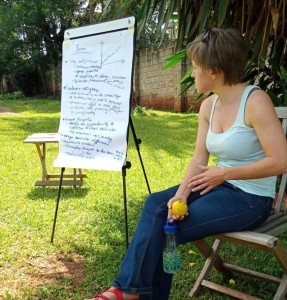 Sometimes we have 2 hours to build something great for a client that others may require a week for. We work with mindsets like lean and prototyping to achieve our goals and deliver great value in no time.
Constant learning – We are constantly seeking knowledge that enables us to improve our services and be our clients’ best partner. Key here is self-driven learning, being curious and inquisitive, using online resources, peers and the larger community to be at the top of new industries and trends. Together we develop specific skills that would be useful in our work. For example, we have jointly taken courses on project management and design thinking and have turned newly learned theory into new improved approaches and products immediately! (See more about how we learn in this article)
Flexible – We place more emphasis on your productivity and contribution, opposed to what time you arrive at the office. Everyone has daily and weekly outcomes set, and arranges their time in a way that works best for them. We collaborate using virtual tools and value creativity in meeting client needs. Nobody looks over each other’s shoulder. We own our stuff and strive for excellence in our work. This requires you to be highly self-motivated and self-organized.
Are you the kind of person who thrives in such an environment? Please take a look at the open jobs on our Join Us page!

by Manuela Müller | Aug 21, 2019 | Career Happiness, Thoughts on Team
Mental health is a state of well-being in which every individual realizes his or her own potential, can cope with the normal stresses of life, can work productively and fruitfully, and is able to make a contribution to her or his community (WHO definition).
In practical terms, mental well-being is how you handle and respond to challenges in the day to day life, how you think, how you express your emotions and how you thrive in the face of adversity. By identifying what triggers your mental health and having effective coping strategies, you’re able to live a fulfilled life, and are able to create a balance between your emotions, behavior and actions.
So, today we’d like to pose the question: How are you doing?
Like, really doing?
Most people spend a big portion of their time at work, it is therefore fair to say that the work environment plays a key role in influencing one’s mental health, and in turn their productivity, as well as how they relate to others inside and outside the workplace. Ideally, the workplace should be a place that provides employees with a positive experience, sense of fulfillment and provides them with a good work-life balance. Lack of these can contribute to mental illness, among other contributing factors.
What is a mental illness, you may ask? Mental illness is any condition or disease that influences the way a person thinks, feels, behaves, and/or relates to others and to his or her surroundings. Examples of mental illnesses include depression, anxiety, panic attacks, eating disorders, addictions, and so forth.
Globally, anxiety and depression have been found to be the leading mental disorders encountered in the workplace. Read more about these two disorders in this article to get a better understanding of their differences. Here in Kenya, according to research by Nation Newsplex; one in four Kenyans is likely to suffer from a mental illness at some point in their life.
Why you should care as an employer:
Integrating mental wellness interventions in your organization’s policies and creating a safe space for employees to be honest about their mental state is detrimental to having a happy, engaged and productive workforce for different reasons:
- Caring about your employees’ mental well being increases their engagement levels and employees feel more positive about their work. Why? Because they’re able to show up to work with enthusiasm, and a feeling of purpose and ownership for their work, and what employer doesn’t want that?
- Having a non-toxic work environment increases productivity. A recent WHO-lead study gauges that depression and anxiety issues cost the worldwide economy US$ 1 trillion every year in lost productivity. Imagine how many non-productive meetings happen every day, and how many hours and days of work are lost when employees brood over unresolved issues?
- The new generation of employees really cares about mental health, and if you can credibly position yourself as an employer who cares equally as much, you will attract and retain some fantastic talent!
As a manager who wants to take a few first steps you may be asking yourself a few questions right now:
- What are some of the factors that lead to and/or trigger mental illness in the workplace?
- What support can I provide to employees facing mental health issues?
- How can I promote a culture that enhances the mental well being of my employees?
Let’s find out together. Shall we?
Factors that trigger mental illness in the workplace:
- Lack of effective communication – In order for employees to understand their roles, and expectations; managers have to clearly, accurately and timely inform them of what is expected of them for them to be valuable in the organizations work. Failure to which, employees feel frustrated and stressed about not knowing the purpose of their work and this can greatly affect their well being.
- Inadequate or lack of role clarification for employees- few things are as frustrating as having a job where roles and expectations are not well defined. For employees to add value; they NEED to know what is expected of them. And no, just giving them a document with a list of things is not enough. Managers need to sit down with their employees and establish clear outcomes from the get go. Otherwise, an employee will spend hours, days, possibly weeks feeling like they are not serving any meaningful purpose and this can deteriorate their mental wellness.
- Not having a work-life balance – Organizations are of course focused on achieving the goals they have set for themselves in order to achieve profitability, to create impact, and and to fulfill client/consumer needs. However, imposing these goals on employees to an extent where their work life balance is pretty much non-existent is unfair to their wellness. I have personally gone out to lunch with a friend who had carried a laptop in case their boss needed them to do something urgently, on a weekend if I may add, so our scrumptious meals were joined by a laptop on the table with excel sheets that needed data input and editing and complaints about how this consistent behavior has affected his mental health.
- Limited autonomy at work; otherwise known as micro management- Now, if you’ve ever been micro-managed, you know how dreading it can be, to always be on the edge about your supervisor constantly breathing on your neck about how, when and what you are supposed to do- at all times! This approach of managing people creates a strong sense of fear, discomfort and causes rapid anxiety.
- Harassment and Bullying – violence is not always representative of physical assault. Threatening team members verbally or in written form, humiliating them using condescending language and actions, intimidating them, or sexually harassing them are all forms of violence in the workplace. These behaviors and actions decrease an employees confidence and self esteem, and in extreme cases cause debilitating anxiety and depression.
- Not paying employees on time, or not paying them at all – depriving your employees of their ability to take care of their financial responsibilities and enjoy any other pleasurable activities outside of work can trigger mental illnesses, reduce productivity and increase turn over.
- Lack of recognition – not recognizing your team members successes reduces their confidence and demoralizes them. This can cause emotional distress if they feel like their contribution is not being acknowledged and can even lead them to resign.
These are just some of the things that could tremendously affect an employee’s mental well being. Learn more about the symptoms to look out for that may be caused by mental health issues.
So what support can you provide as a manager in the event that your employee(s) mental health is suffering?
- Educate yourself about the risk factors that lead to mental illnesses (anxiety and depression) and reflect upon the culture you have shaped for your employees; how is it contributing to mental wellness, or lack of it? Possessing this information enables you to create initiatives that can improve employees well being.
- Discuss mental wellness in the workplace. Understandably, it’s not an easy topic of discussion. However; creating a space for these conversations encourages team members to be open about it and seek help where need be and reduces the stigma that surrounds mental health.
- Support your team members efforts to seek help. This could be in the form of a day off, providing flexible work hours for them to pursue activities that improve their well being (fitness, yoga class etc) and if possible, hiring a psychological counselor to support them at work and provide them with self help tools they can use to improve.
- Provide opportunities for your HR department to receive training on how to identify symptoms of mental illness and manage them successfully.
- Organizing bonding activities. Activities such as potluck lunches, birthday celebrations, or outings create a sense of togetherness and trust, which can enable people to open up about any issues that they are facing affecting their mental health.
How can you promote a culture that enhances the mental well being of your employees?
- Hire managers that won’t affect your teams well being. Managers inevitably influence team members emotions, thoughts, actions and ultimately their mental state. When assessing managers; establish a criteria that show you what people management approach they use and compare it to the vision you have for your organization and that of your employees well being and how they can shape a desired culture that promotes a healthy workforce. In addition; you can include this in their on-boarding plan – what skills and knowledge do they need to acquire to enhance an environment that promotes good mental health?
- Fire bullies. Yes, we said it. And this does not necessarily have to be managers; it can also be peers who have a strong sense of entitlement and project it on other team members, thus making them feel insufficient and dread coming to work. If more than one person is complaining about the behavior and actions of a certain employee; its safe to say that you should examine this more deeply in a serious way.
- Be the example. Employees emulate what their leaders practice. Encouraging employees to take their leave days, take their lunch break away from their computers and take work breaks is critical. As a leader, it’s important that employees see you unplugging by taking breaks during work, taking leave days and not responding to emails at odd hours of the night. As the old saying goes; practice what you preach.
- Recognize when an employee does a good job. Team members want to know that their work matters, and that they are adding value to the organization. Not only does this boost their productivity, but it also boosts their mental well being because they feel appreciated.
- Give your employees autonomy in their work. We’re not saying that you let your employees run wild and let them do whatever they want. However, by empowering them through asking for their input and giving them a clear role in decision making, you enable them to know how they can achieve set goals and KPIs therefore increasing their engagement and creativity.
- Allocate roles based on your team’s strengths and interests. Consider a scenario where you give an introverted team member an external facing role and give an extrovert an internal facing role. By allocating roles that are not aligned to your team members strengths, personalities, or interests – you are making their work draining to them, and in turn draining their mental energy to focus and be productive. When assessing candidates; ensure you understand what their interests are and give them roles where they will add the most value and be successful.
We’d love to hear from you: How are you creating a space for emotional well-being and mental health at work?
Email us on getstarted@edgeperformance.co.ke – we’d love to create another blog post with more real life examples and good case practices that organizations across East Africa are using!

by Fabianna Mueti | Jul 29, 2019 | Career Happiness, Mapping and Transition
The self-help industry (books, podcasts, and you tube) has made a fortune off of telling us that we should follow our passions and ONLY do what we love and are passionate about.
Contrary to this famous piece of advice; over the years, thought leaders such as Ben Chestnut, CEO of email marketing service MailChimp have challenged this, stating in one interview; “It should be, ‘Love what you do. Take the job, learn to live in the moment and love it, master it, and doors will open for you if you’re good at what you do. Turn it into a passion if you can.”
When bombarded with questions and thoughts around purposeful/meaningful work, we often find ourselves starting to digress towards worrying thoughts;
– So what if I don’t know what I’m passionate about, is finding work I love a dead end for me?
– What if I lack skill and expertise in what I love?
– What if what you love can never make me rich?
There are a couple of things that the above concept ignores:
1. That passions are constant – This is UNTRUE. Passion is built out of exposure, interest, and practice. I could be passionate about film making this year and later evolve into wild life conservation. Why put a limit on yourself?
2. Just because you’re passionate about something- does not mean you can earn an income from it.
3. Its toxic optimism and vague – we all know that finding meaningful work is not as easy as just waking up one day and doing what we’re passionate about. Beyond your passion, what more does it take to have a meaningful career? Follow your passion tells you nothing about the planning that is required to be successful and the layers of mastery required to ACTUALLY be successful.
4. Your passion is not the solution to all your problems – Could it be you’re unhappy because you don’t communicate your frustrations to your supervisor, and maybe, just maybe, you would actually be happy if you took the initiative to tweak some of the situations in your life? Welp!
In her TED talk- Stop searching for your passion Terri Trespicio talks compellingly about how searching for your passion or waiting for it to show up can make you miss out on pursuing exciting ventures, quoting “Don’t sit around waiting for passion to show up. Spend your time and attention solving your favorite problems” adding that “The most fulfilling careers are the ones that have the power to surprise you”. If you’re struggling to figure out what your passion is, or what is it that you want to love doing; listening to this ted talk is a good place to start. Sometimes, you have to learn and experience something in order to love it.
A quote from this article summarizes this perfectly: “Passion doesn’t fall out of the sky or emerge from thin air. It’s the result of experimentation, exploration, and curiosity. You don’t follow it, you find it. And you find it by discovering what you find engaging”.
So what will you try out today?

by Reynold Owuor | Jul 8, 2019 | Career Happiness, Job Applications, Job hunting, Job Search
In this age of technology and communication getting ghosted after applying for a job must be one of the most painful things to experience, even sometimes more painful than being ghosted by your significant other.
Let’s take a look at some of the reasons your recruiter hasn’t gotten back to you. Some of them are simple yet unexpected.
1) You didn’t apply. Sometimes as a candidate you see a job and get over excited reading the job description and daydreaming about how you would be amazing at this job. So you send the recruiter an email expressing your interest and then forgetting to actually fill in the application. Months later you are still waiting for a call or feedback that never comes because you didn’t read the instructions to see what is required to submit an application.
2) Unforgivable mistakes. Applications usually require you to put in a lot of thought as this is the first step in getting noticed by the recruiter. Hence mistakes such as poor grammar, spelling mistakes and small letters in place of caps and vice versa might be the reason you get disqualified from the process. You may have also provided irrelevant responses to the questions!
3) You apply for every job. We know the unemployment rate is high and sometimes you may feel desperate. However in your desperation do not at any point apply for all jobs listed by a company or recruitment firm. This might be taken to mean that you do not have an actual passion/interest for any role and are just applying for the sake of applying.
4) One size fits all CV. Before applying for any job go through your CV and make sure it highlights clearly your skills and experiences relevant to the JD. Some candidates copy paste their current job description into their CV and even go as far as copying pasting the same description on all their past roles with similar titles. Other common cases where the CV has several diverse experiences thus it’s difficult to pin point where the relevant expertise for the specific job you are applying for is.
5) The recruiter is overwhelmed. Sometimes the recruiter has to go through hundreds of applications and this makes the process take longer. Sit tight and wait for the process to run its course they will hopefully get back to you.
6) You are stalking the recruiter. The recruiter is just as excited to fill the role as you are to get the job. And sometimes in your excitement and impatience you end up calling the recruiter every day even on weekends for feedback on your application. While asking for feedback is acceptable overdoing it might communicate a lack of professionalism on your end.
7) Wrong phone contact. You made a great application. However your phone number is incorrect.
8) They have changed their hiring plans. Often, in the course of a hiring process, the business may undergo major changes that lead to hiring decisions being halted. Such could include change in budget, team, business priority and so on. Sometimes in this period there are a lot of internal conversations and uncertainties that delay the decision on what to do with the current applicants.
9) You are unreachable via phone or email. Timely communication really helps in the process, in case you are unavailable let the recruiter know, be professional in your communication. Some applicants may go offline for a while and not inform the recruiter and hence loose out on communication regarding the selection process of the role. Keep checking your spam folder to avoid missing an email.
10) The overall decision maker is unavailable. The recruitment process is sometimes longer than usual because the hiring manager or overall decision maker is unavailable; maybe they are on business travel, leave or have taken a sabbatical and therefore this drags the process.
11) Other good candidates. It is painful to hear but maybe there is another candidate out there who has more years of experience, is more skilled and submitted a great application. Thus the recruiters are running an assessment for those before considering everyone else. Sometimes actually they may end up still considering your application!
12) Bearer of bad news. Recruiters are human too and no one ever wants to be the bearer of bad news, so maybe you haven’t gotten feedback because someone is procrastinating giving you bad news.
13) Qualifications. And the most obvious reason could just be that you did not qualify for the role and that’s why you haven’t been called for that interview.
We hope you enjoyed the series!
by Manuela Müller | Mar 1, 2019 | Career Happiness, edge journey
A young professional thinking of joining our team recently asked an interesting question: “What kind of clients do you work with, and which industries do you focus on?”
The most exciting part about a job in business advisory is the diversity and exposure!
Arguably, providing business growth services is the best job. The exposure you gain to a range of industries, business models and entrepreneurial journeys is just mind blowing.
To illustrate the point: Last month, the edge team handled projects with clients in the financial services industry, rural development and business acceleration space. We also supported a sales company penetrating rural areas, a philanthropic funder of African homemade innovations, a community hospital in a slum, a foreign trade organization, AND a science-focussed secondary school.
Yeah, exactly! Imagine the conversations over lunch! Being involved in several projects per quarter means intense learnings for each individual. It also means that you get to (and have to!) research and become an expert REALLY fast about new industries and realities!
We learn so much from the kind of questions our clients wrestle with!
As we network with potential clients, we have conversations to really understand their vision, model and approach. By the time we take on board a new client, we know they are inspiring leaders in their fields, entrepreneurs and risk-takers and have big dreams. Many of our clients create employment, make sure East Africans get the services and products they need, and over the years touch thousands of lives and livelyhoods.
Instead of working transactionally, we build a deep, trusted and long-term relationship with our clients. Knowing that talent management is at the core of successful organizations, we get involed in their most business critical questions:
- How can we grow sales by factor 12 this year so that we hit breakeven?
- As I bring in new people, how do I make sure they don’t just ‘want a job’, but we shorten the time they need to understand our culture and start contributing explosively?
- Who will help us build the right processes as we grow from 2 to 4 branches this year?
- As I’m transitioning out as the founder after 15 years, how do I make sure the spirit lives on but doesn’t suffocate my successor as they take the organization forward?
- To build a radically new approach to sales in rural areas, what kind of manager do we need to hire?
In short: Every day is like a very practical MBA class.
Scratch that: Every day feels like doing a PhD in entrepreneurship!
We listen when things get hard, laugh together when we a problem solves itself, answer calls late at night, and sometimes we just have a coffee or beer together, reminiscing about the journey, failures and successes.
Aha, sounds great! My last question: Do I get to choose my clients and will I have sales targets?
We work in long-term co-creative partnerships with our clients, so your first projects will most likely be with our existing clients or their close networks, who they referred because they loved the value they gained through edge.
The great news is that the longer you stay in edge, the more influence you have on the types of clients you handle. Some of us start working on our own sales already after a few months or a year with edge. Once you’ve understand our unique sales approach and our services, we’re happy for you to go and have conversations with new potential clients and partners!
In the spirit of focussing on your strengths, you will only be directly involved in client acquisition and get sales targets if you find this work energizing and exciting!
Does this kind of work and environment sound energizing to you?
Ready for the challenge? Take a look at our opportunities to join our team!


